Between 3–6 months after giving birth, many new mothers face the same anxiety: strands of hair tangled in the comb after brushing, fallen hair scattered on pillows, a gradually receding hairline, and once-thick hair turning thin, fine, and easily breakable.
Postpartum hair loss is a normal physiological response caused by hormonal fluctuations and insufficient qi and blood. However, choosing the right comb can minimize pulling and damage, protect remaining thin strands, gently massage the scalp to boost circulation, and create favorable conditions for hair growth.
Combining advice from obstetric care specialists and professional hairstylists, this article recommends the best combs for postpartum hair loss, along with scientific usage tips, to help mothers get through the shedding period gently and care for every fragile strand.
I. Hair & Scalp Traits During Postpartum Hair Loss
The Core Guide to Choosing a Comb
Hair and scalp are especially fragile during postpartum shedding. Unlike ordinary hair loss, the key issues are loose roots, dry brittle strands, and sensitive scalp—these are the main principles for selecting a comb. Avoiding these pain points effectively reduces damage:
- Fragile, easy-to-fall roots: Postpartum hair follicles enter the telogen phase, greatly weakening root attachment. Even light pulling causes shedding. Combs must prioritize zero pulling and low pressure.
- Fine, dry, brittle strands: Insufficient qi and blood leave hair undernourished, making it fine, inelastic, prone to tangling and breaking. Low-friction, gently nourishing materials are ideal.
- Sensitive, delicate scalp: Hormonal changes often lead to oily, dry, or itchy scalp. Avoid chemical materials and sharp teeth; choose gentle, non-irritating natural materials.
Obstetric care specialists emphasize:
During postpartum hair loss, root protection matters far more than styling. The right comb can reduce unnecessary shedding by up to 30% and lay a foundation for future regrowth.
II. Best Combs for Postpartum Hair Loss
(By Function, for Targeted Care)
Based on postpartum hair conditions, the following three types of combs are expert-approved to protect thin hair, avoid shedding triggers, and suit different scenarios.
1. Root-Protecting & Pressure-Relieving
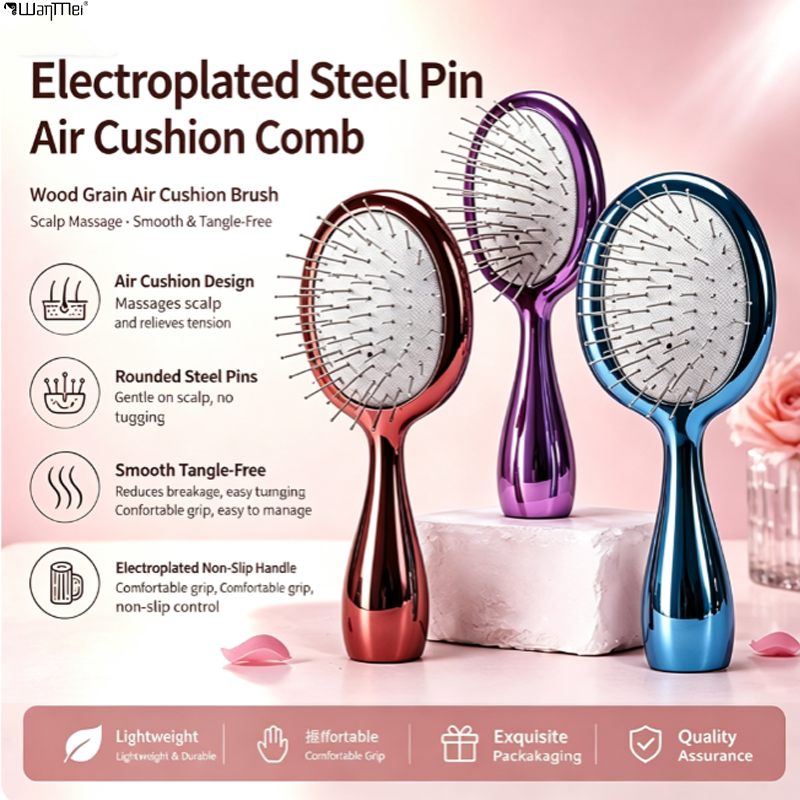
Air Cushion Boar Bristle Brush
(Top choice for daily dry hair)
The air cushion boar bristle brush is a root-protecting essential for postpartum hair loss, perfectly matching the needs of low pressure and low friction.
Why it works:
- The elastic air cushion buffers brushing pressure, avoiding direct stress on fragile roots and reducing shedding.
- Natural boar bristles are ultra-soft with very low friction against hair, preventing cuticle damage.
- It evenly distributes the scalp’s natural oils to nourish fine, dry strands and gently massage the scalp to improve blood circulation.
Best for: All mothers with postpartum hair loss, especially those with fine, flat, easily breakable hair.
Recommended styles:
- Hercules Soft Boar Bristle Air Cushion Brush
- MUJI Wooden Handle Air Cushion Brush
Soft boar bristles won’t irritate the scalp, the cushion rebounds gently, and it adds light volume at the roots for a fuller look.
2. Gentle Detangling
Natural Wood Wide-Tooth Comb
(Must-have for wet & dry use)
Wet hair is at its most fragile after washing. Forcing tangles causes heavy shedding—this comb is essential for both wet and dry hair.
Why it works:
- Wide teeth (≥6mm spacing) minimize contact with hair, gliding through tangles without pulling roots.
- Natural peachwood or green sandalwood is static-free, chemical-free, and mild on the scalp, easing dryness and itchiness while reducing friction damage.
Best for: All postpartum mothers, especially those with long, tangle-prone hair and sensitive scalps.
Recommended styles:
- Tan Mujiang Peachwood Wide-Tooth Comb
- Netease Yanxuan Green Sandalwood Wide-Tooth Comb
Teeth are finely polished, smooth and burr-free; no paint or wax avoids chemical irritation. Safe for wet hair, gentle for dry hair.
3. Localized Care
Round-Tip Fine-Tooth Comb
(For the hairline)
The hairline is the worst-hit area for postpartum shedding, with thin strands and many flyaways. A round-tip fine-tooth comb provides targeted care.
Why it works:
- Rounded tips protect the delicate scalp along the hairline and avoid pulling hairline roots.
- Fine teeth gently tidy flyaways for a neater look without damaging remaining strands.
Usage note: Only for dry hair, on the hairline or bangs—do not use for full-head brushing, as fine teeth may over-pull.
Recommended styles:
- Shiseido Round-Tip Fine-Tooth Care Comb
- MINISO Baby-Safe Round-Tip Comb
Compact and easy to hold, with soft, smooth teeth for precise care of thinning hairlines.
Quick Reference: Postpartum Hair Loss Comb Selection
表格
| Comb Type | Core Benefits | Best For |
|---|---|---|
| Air Cushion Boar Bristle Brush | Protects roots, nourishes hair, massages scalp | Daily dry brushing, fine & thin hair |
| Natural Wood Wide-Tooth Comb | Gentle detangling, static-free, wet/dry use | Wet hair, tangles, sensitive scalp |
| Round-Tip Fine-Tooth Comb | Targeted hairline care, no scalp irritation | Dry localized styling, thinning hairlines |
III. Pro Combing Tips for Postpartum Hair Loss
Reduce Shedding, Enhance Care
Once you have the right comb, proper use further cuts down shedding. Specialists share 3 key tips:
- Brushing order: Start at the ends, gently loosen tangles, then move upward toward the roots. Never brush straight from roots to ends, which pulls and dislodges hair.
- Wet hair care: After washing, press-dry hair with a absorbent towel (do not rub). When half-dry, gently comb with a wood wide-tooth comb. Apply a small amount of silicone-free hair oil to mid-lengths and ends first to lower friction.
- Cleaning & maintenance: Clean combs once a week. Rinse wood combs quickly with warm water and air-dry immediately to avoid water damage. Use a soft brush to remove hair from cushion combs to prevent bacteria buildup.
IV. What to Avoid
Combs That Worsen Postpartum Hair Loss
The wrong comb can directly worsen shedding. Steer clear of these three types:
- Cheap plastic combs: High friction, static-prone, cause breakage and may release irritants harmful to sensitive scalps.
- Sharp-tooth / metal combs: Sharp teeth scratch the scalp; metal creates heavy static, worsening dryness and shedding while pressing fragile roots.
- Full-head fine-tooth combs: Narrow spacing aggressively pulls strands, causing root loss and breakage—completely unsuitable for thin, fragile postpartum hair.
Final Note
Postpartum hair loss is normal and usually improves within 6–12 months as hormones stabilize.
During this time, a gentle, root-protective comb plus proper brushing habits reduce immediate shedding and support long-term hair health. Mothers need not feel anxious—with gentle self-care, thinning hair will gradually regain strength and fullness.
If hair loss continues beyond 12 months with no improvement, consult an obstetrician or dermatologist to check for issues such as insufficient qi and blood.