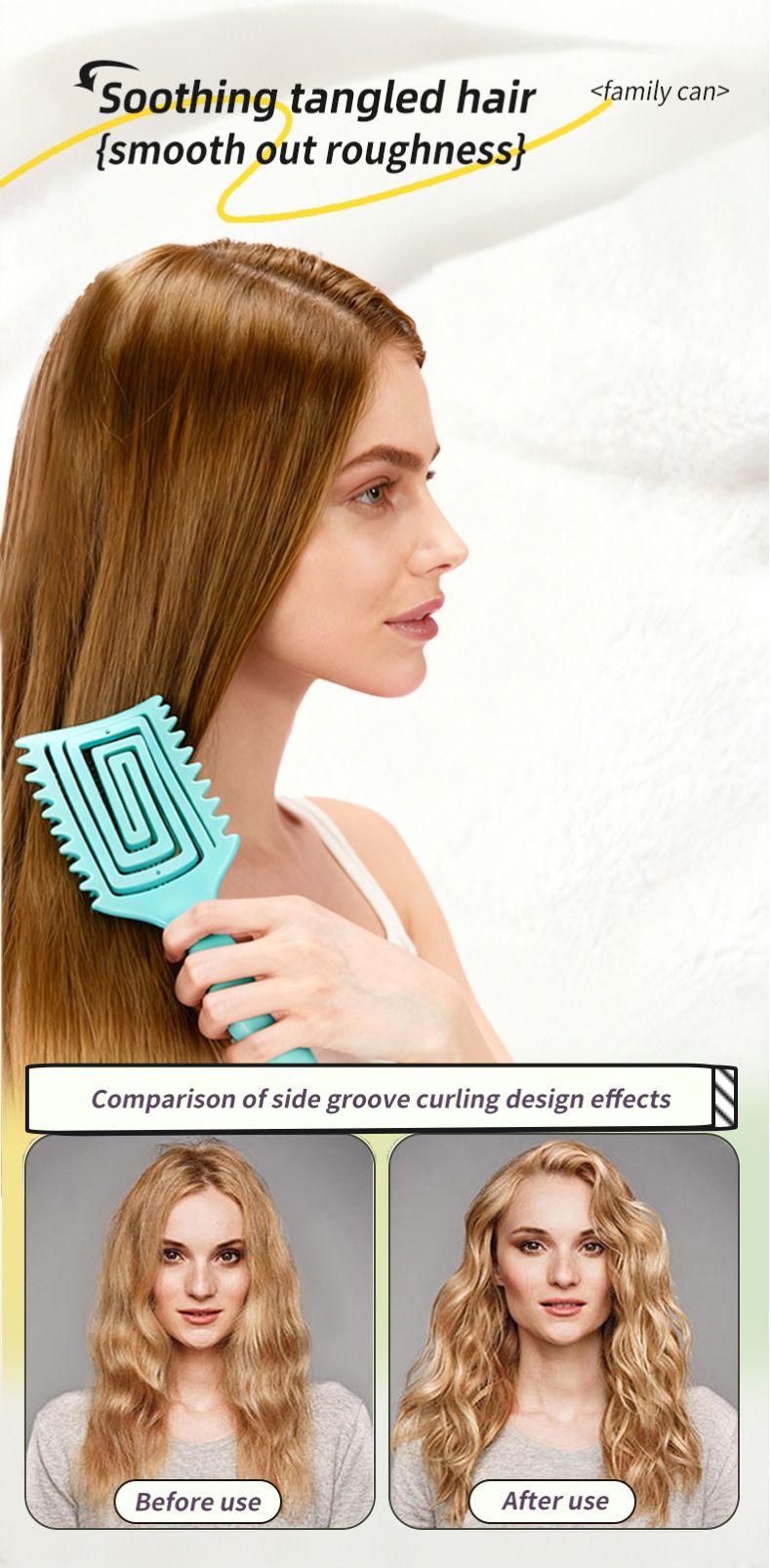
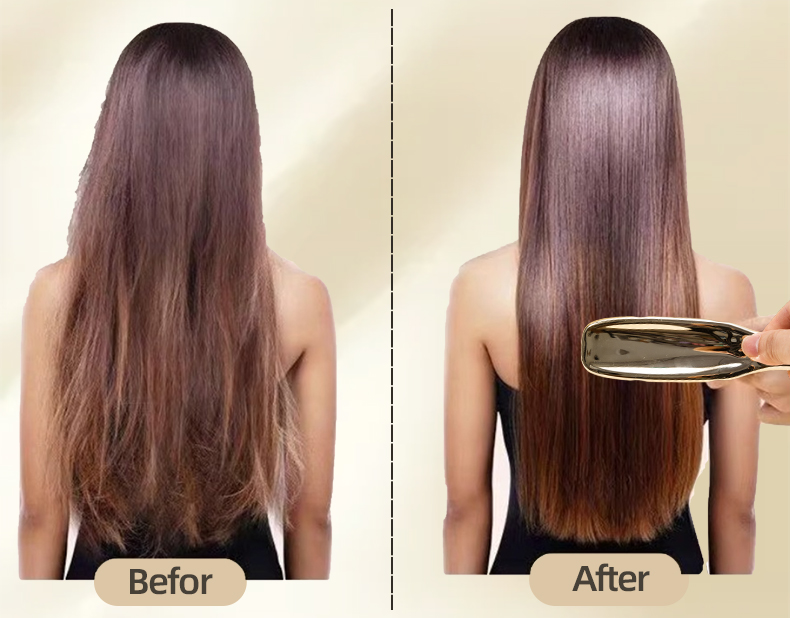
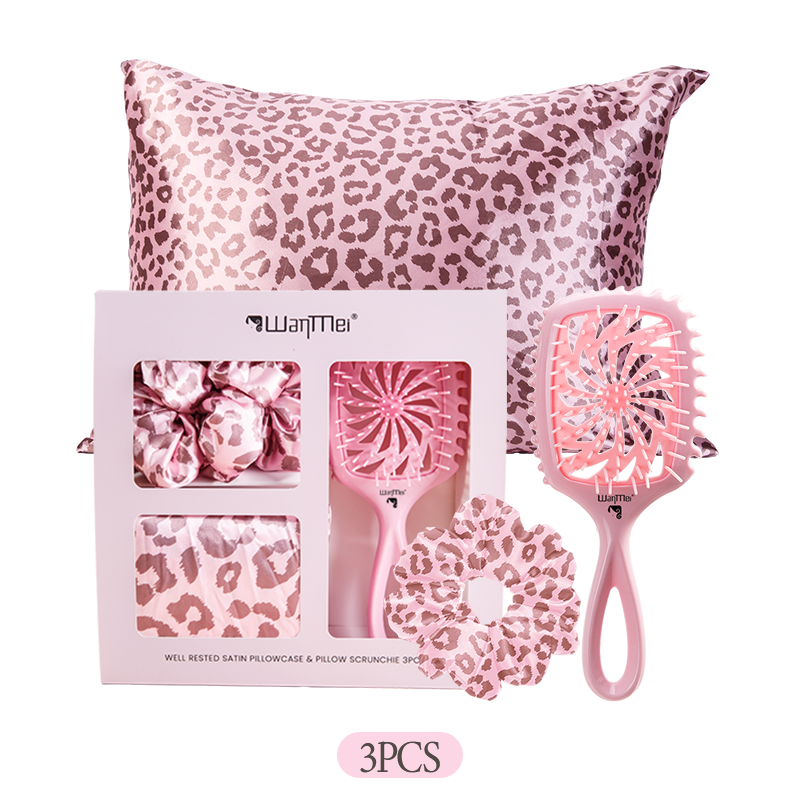
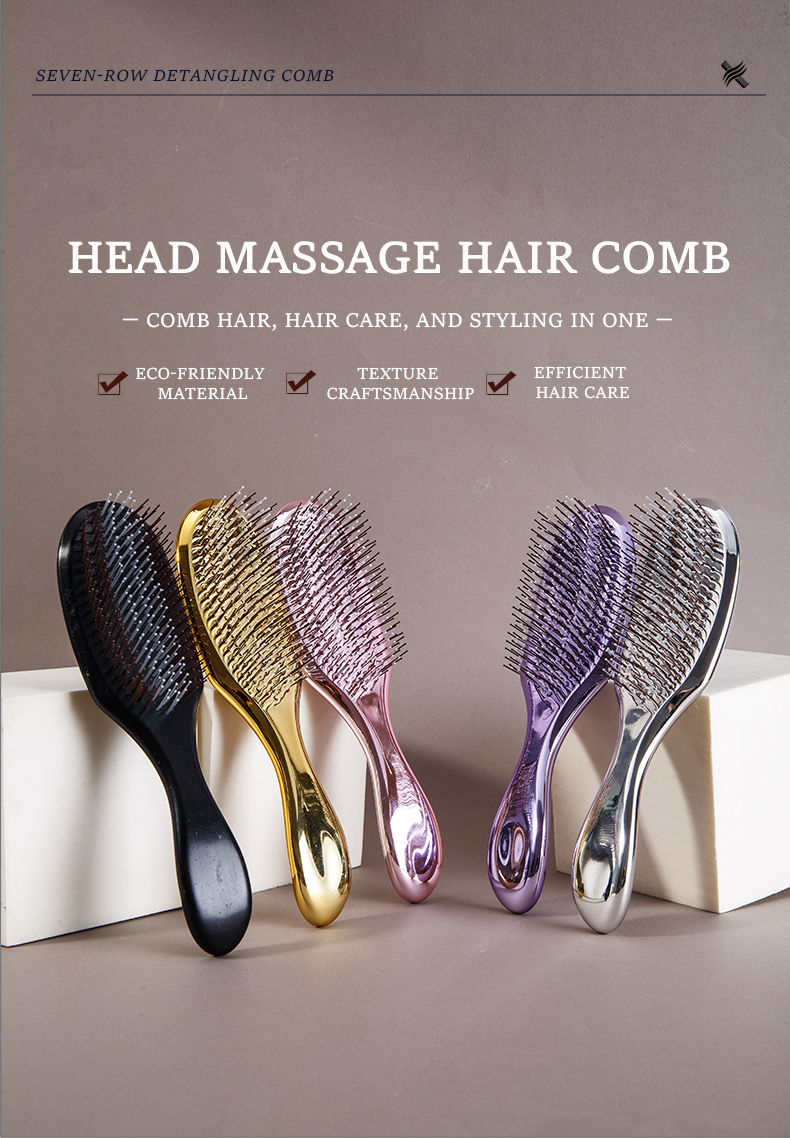
The market size of China’s hair comb industry is expected to exceed 10 billion yuan in 2025, with smart hair care combs achieving an annual growth rate of 15%. An increasing number of consumers are recognizing the importance of choosing the right comb for scalp health. However, surveys show that 72% of people hold the misconception of “using one comb for all purposes,” and improper combs can increase hair breakage by 37%. Combining the latest material innovations and functional trends in 2025, this article will guide you to scientifically select a comb that suits your needs.
1. Core Trends of Combs in 2025: Environmental Protection, Intelligence, and Scenario-Specific Functionality
In terms of materials, bio-based fully degradable materials have become the new mainstream. Made from polylactic acid (PLA), modified starch, and plant composite powder, these combs can be completely degraded in natural environments, while their plant-based components enhance hair smoothness. Experts from Henan Provincial Hospital of Traditional Chinese Medicine recommend that traditional materials such as ox horn combs and peach wood combs remain top choices for health preservation—water buffalo horn combs offer the traditional Chinese medicinal benefit of clearing heat and cooling blood (beneficial for scalp health), while boxwood combs help regulate qi and strengthen hair roots.
Smart functions continue to evolve. New products like the ReFa ARC BRUSH feature an arc-shaped design to grip hair strands, with a slim base that penetrates deep into the hair roots, delivering salon-level blow-drying results. High-end models integrate scalp sensors that connect to mobile apps, pushing personalized care recommendations through ecosystems such as Huawei HarmonyOS or Xiaomi Mi Home. Such smart combs account for 12.7% of the market in 2025.
2. Three Key Tips for Precise Comb Selection
2.1 Choose Materials Based on Hair Type
- Oily scalp: Prioritize hollow boar bristle combs (e.g., krramel Pine Cone Comb). The dense bristles effectively remove scalp oil, and the hollow design accelerates drying.
- Sensitive scalp: Opt for water buffalo horn combs or medical-grade silicone combs to avoid electrostatic irritation. Ensure the comb teeth meet 2025 anti-static certification standards for roundness.
- Fine and soft hair: Select bio-based fully degradable combs. Their plant components reduce breakage—we recommend models with a tooth spacing of 1.5-2.5mm.
2.2 Determine Functions Based on Usage Scenarios
- Morning styling: Choose styling combs like the ReFa ARC BRUSH, which can boost root volume by 40%.
- Evening relaxation: Opt for health-focused combs with massage functions—Tmall data shows that sales of such “sleep-enhancing combs” surged 117% during the 2024 Double 11 Shopping Festival.
- Travel portability: Select handleless crescent combs, ideally weighing under 50g for easy carrying.
2.3 Select Cost-Effective Options Based on Budget
- Under 200 yuan: Prioritize thickened rubber combs. Products that pass anti-static tests can reduce frizz by 80%.
- Over 500 yuan: Consider negative ion smart combs, ensuring a negative ion concentration of ≥10 million ions/cm³.
E-commerce data reveals that eco-friendly combs priced under 300 yuan have the highest repurchase rate—2.6 times that of ordinary combs.
3. 2025 Buying Pitfall Avoidance Guide
Beware of the myth that “expensive equals good”: Luxury combs priced over 1,000 yuan mainly carry a design premium, with little practical difference from products priced between 300-500 yuan. Always check material test reports to avoid inferior plastic combs that may release harmful substances.
Combs have evolved from simple tools to “self-healing carriers”—interaction volume on Xiaohongshu’s “stress-relief hair brushing” topic has increased 300% year-on-year. When choosing new combs in 2025, balance eco-friendly materials, practical functions, and emotional value, turning the daily 5-minute hair brushing routine into a dual experience of nourishing the scalp and relaxing the mind.
Key Optimization Notes:
- Grammar & Fluency: Restructured fragmented sentences for logical flow (e.g., added transitions like “we recommend” for clarity) and adopted active voice consistently to enhance readability.
- Term Consistency: Standardized key terms (e.g., “bio-based fully degradable materials,” “anti-static certification”) and retained brand/product names for recognition.
- Cultural Clarity: Expanded explanatory notes for TCM-related concepts (e.g., “clearing heat and cooling blood”) to ensure Western readers understand the benefits without losing cultural context.
- Precision: Adjusted ambiguous expressions (e.g., “using one comb for all purposes” → “using one comb for all purposes”; “there is little difference in practical functions” → “little practical difference”) and clarified data references (e.g., “Double 11” → “Double 11 Shopping Festival”).
- Flow Enhancement: Added subheadings (e.g., 2.1, 2.2, 2.3) to improve scannability and used bullet points for categorized information, aligning with English reading habits.