As soon as the dry season arrives, many people are troubled by hair static: when combing hair, the strands fly around, stick to the face and clothes, and it takes a long time to comb smoothly. It even pulls the scalp and causes pain, which not only affects the appearance but also damages the hair strands. In fact, the key to solving hair static is not only to keep the hair moisturized but also to choose the right comb, which can get twice the result with half the effort. Today, we will detail how to easily get rid of hair static troubles and keep the hair smooth and sleek by choosing and using the comb correctly.
To solve static with a comb, you first need to understand: the core of hair static generation is “triboelectrification” — when dry hair rubs against the comb, charge transfer occurs, causing the hair strands to carry the same kind of charge and repel each other, resulting in flying and frizzy hair. Therefore, the core principle of choosing a comb is: reduce friction, increase conductivity, and avoid charge accumulation. Choosing the wrong comb will aggravate static, while choosing the right one can alleviate or even eliminate static from the root.
Step 1: Choose the Right Comb Material to Reduce Static from the Root
The material of the comb is the key to determining whether static is generated. Combs of different materials have very different triboelectrification effects. It is recommended to give priority to natural materials and avoid those prone to static.
Preferred materials: Wooden combs and horn combs (ox horn, sheep horn). These two are the “golden choices” for solving static. Natural wood (such as boxwood, sandalwood, peach wood) and animal horn materials have good conductivity and a warm texture. When rubbed against hair strands, they can reduce charge transfer and almost no static is generated. Moreover, wooden combs and horn combs are soft in texture, can fit the scalp, will not pull the hair strands when combing, and can also massage the scalp by the way to promote blood circulation, taking into account both hair care and anti-static. They are especially suitable for dry and frizzy hair, and long-term use can also improve dry hair problems.
Secondary choice: Metal combs (stainless steel, copper). Metal materials have extremely strong conductivity. Even if a small amount of charge is generated by friction, it can be quickly conducted away and will not accumulate on the hair strands, so the anti-static effect is also very good. However, metal combs are relatively hard. It is recommended to choose styles with rounded comb teeth and non-slip handles to avoid scratching the scalp and hair strands, which are suitable for people with short hair or thick and hard hair.
Firmly avoid: Plastic combs and nylon combs. These two materials are “static hotspots”. Plastic and nylon have extremely poor conductivity. When rubbed against dry hair strands, they will quickly accumulate a lot of charges, leading to severe static, and even make the hair strands more dry and frizzy. If you only have a plastic comb temporarily, you can use it for emergency, but it is not recommended for long-term use.
Step 2: Choose the Right Comb Style to Double the Anti-Static Effect
In addition to the material, the style of the comb also affects the anti-static effect. Different hair types and lengths are suitable for different styles. Only precise selection can get twice the result with half the effort.
Dry and frizzy long hair: Give priority to wide-tooth wooden combs or airbag wooden combs. The wide-tooth comb has a large spacing between the teeth, which reduces the contact area with the hair strands when combing, reduces friction, and can effectively avoid static and hair pulling; the airbag wooden comb has elastic comb teeth, which can buffer the force when combing, fit the scalp while reducing friction, and can also massage the scalp through the airbag to promote oil secretion, make the hair more moisturized, and reduce static from the root.
Fine and soft hair/short hair: You can choose fine-tooth wooden combs or metal combs. Fine and soft hair itself secretes less oil and is prone to dryness and static. The fine-tooth wooden comb can accurately comb each hair strand, reduce friction, and avoid hair tangling; the metal comb can quickly conduct charges, which is suitable for daily care of short hair and avoids hair sticking to the face due to static.
Note: No matter which style you choose, make sure the comb teeth are rounded and smooth without burrs. Otherwise, it will scratch the hair cuticles, cause hair damage and dryness, and instead aggravate static.
Step 3: Use the Comb Correctly to Avoid Static “Minefields”
Choosing the right comb is not enough; correct use is also very important. Many people still suffer from static even though they use anti-static combs because of improper use. These small tips must be remembered.
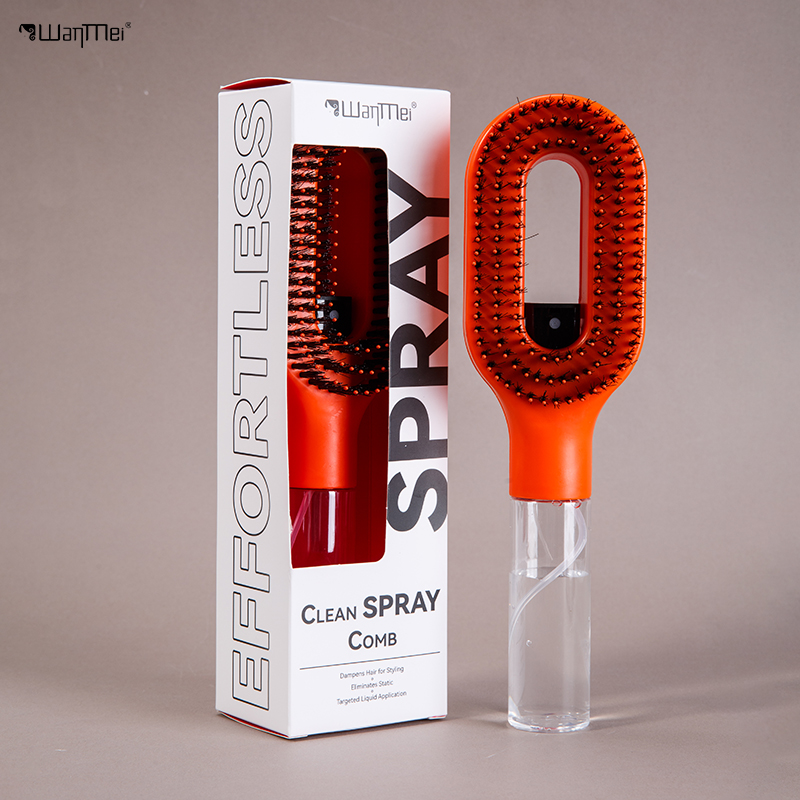
1. “Replenish water” for the hair strands before combing: Dry hair strands are more likely to generate static. Before combing, you can apply a small amount of hair oil to the ends of the hair, or spray a small amount of warm water with a spray bottle (15-20cm away from the hair) to keep the hair strands slightly moist, then comb with a comb, which can greatly reduce triboelectrification.
2. Correct combing order: Do not comb directly from the hair root to the tip, as this is easy to pull the hair strands and generate static. The correct method is: start from the hair tip first, gently comb the tangled hair strands, then slowly comb upward to the hair root with gentle force to avoid excessive friction.
3. Clean the comb regularly: After using the comb for a long time, it will accumulate dust, oil and hair strands. These dirt will increase the friction between the comb and the hair strands and aggravate static. It is recommended to clean the comb once a week, rinse it with warm water, and use it after air drying naturally to keep the comb clean and tidy.
4. Avoid combing in a dry environment: In dry environments such as air-conditioned rooms and heated rooms, both the hair strands and the comb are prone to dryness, and triboelectrification will be more serious. It is recommended to turn on a humidifier or place a glass of warm water beside you when combing your hair to increase the environmental humidity and reduce static generation.
Conclusion: Choose the Right Comb to Easily Say Goodbye to Static Troubles
Hair static seems like a small problem, but it seriously affects the appearance and hair health. To solve this problem, there is no need to spend too much cost. Choosing the right comb and matching it with the correct use method can easily get rid of the trouble. Give priority to natural materials such as wooden combs and horn combs, choose the right style according to your hair type and length, and pay attention to combing skills and environmental humidity, so that you can keep your hair smooth and sleek and stay away from static embarrassment.
Remember, a good comb can not only solve static but also care for the scalp and nourish the hair. If you insist on correct combing habits for a long time, you will find that not only the static disappears but also the hair becomes more soft and shiny.