Frizzy hair is a daily nuisance for many: hair sticks up like a bird’s nest after waking up, becomes even fluffier after combing, and gets messy at the slightest gust of wind. While many people rely on hair care products like hair serums and hair masks to improve the situation, they overlook the most basic tool—the comb. In fact, choosing the right comb and using it correctly can easily tame frizz without any hair care products, leaving your hair smooth and sleek. This article shares 3 hair-combing techniques tested and verified by professional hairstylists, suitable for different types of frizzy hair. Even beginners can master them quickly and say goodbye to the label of “frizzy hair sufferer”.
First, Understand: What Causes Frizzy Hair, and How Can a Comb Fix It?
The root cause of frizzy hair is the lifting of hair cuticles and loss of moisture, which makes the hair surface rough and uneven. The friction between hair strands then leads to fluffiness and flyaways. Proper combing can alleviate frizz from the source by reducing friction, sealing the hair cuticles, and evenly distributing the natural oils secreted by the scalp—this is the key to taming frizz without using any products. Professional hairstylists emphasize that the core principles of combing frizzy hair are: low friction, combing along the direction of hair cuticles, and gentle pressure. Choosing the right comb is the prerequisite, and using the correct method is the core.
Important Reminder: All the methods introduced here do not require any hair care products such as conditioners or hair serums. They only rely on the comb and proper techniques, avoiding product buildup that can add extra burden to the hair. These methods are ideal for people with sensitive scalps, busy individuals, and those who don’t want to rely on hair care products.
Method 1: Cuticle-Aligned Combing (Basic Method) – Quickly Smooth Surface Frizz
Suitable Scenarios: Daily hair styling, quick touch-ups for bedhead in the morning. Suitable for all types of frizzy hair, especially short straight hair and medium-to-long hair with mild frizz.
Core Principle: Combing along the direction of hair cuticle growth reduces friction, allowing the lifted cuticles to close naturally and quickly smoothing surface flyaways.
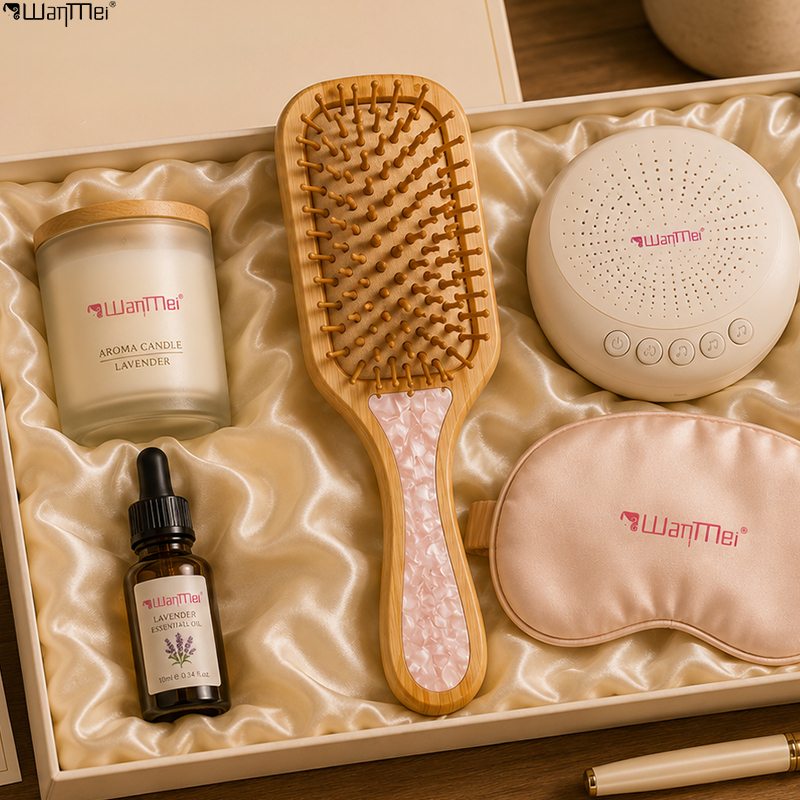
Recommended Comb: Natural wooden combs (peach wood or green sandalwood combs are preferred) or boar bristle brushes. Avoid plastic combs and metal combs, as they tend to generate static electricity and worsen frizz. Prioritize combs with rounded, smooth teeth to minimize damage to the hair cuticles.
Step-by-Step Instructions:
- Before combing, gently pat your hair with your hands to make the fluffy, flyaway sections lie closer to the scalp, reducing pulling during combing.
- Hold the comb and start from the ends of your hair, gently detangling any knots (never pull hard, as this can damage the hair cuticles).
- Once the ends are detangled, comb slowly from the roots to the ends along the direction of hair growth with gentle pressure. Pause for 1 second after each stroke to give the cuticles time to seal.
- Repeat the combing process 3–5 times, focusing on the frizzy mid-lengths and ends. After combing, gently press your hair with your hands to lock in the smooth look.
Key Tips: Keep the comb perpendicular to your hair strands while combing to avoid scraping the hair at an angle. If your hair has a lot of static, lightly wipe the comb with warm water (do not soak it completely) before combing to neutralize static electricity quickly.
Method 2: Oil-Conducting Combing (Nourishing Method) – Tame Dry and Frizzy Hair
Suitable Scenarios: Dry and frizzy hair, split ends, and dull hair. Especially suitable for fine and thin hair as well as long hair, it can make hair soft, smooth, and glossy without additional nourishing products.
Core Principle: Utilize the natural oils produced by the scalp, and transfer them evenly to the ends of the hair through combing to fill the gaps in the hair cuticles and relieve dryness and frizz.
Recommended Comb: Pure boar bristle brushes (soft boar bristles are the top choice). Boar bristles have a similar texture to human hair, allowing them to absorb and transfer scalp oils effectively with extremely low friction, so they won’t damage the hair cuticles.
Step-by-Step Instructions:
- Before combing, ensure your hair is completely dry (oils cannot be transferred effectively on wet hair, and wet hair is more prone to damage).
- Gently massage your scalp with your fingers for 30 seconds to stimulate the secretion of natural oils (no need to apply force; gentle kneading is sufficient).
- Hold the boar bristle brush, start from the roots, gently massage the scalp in circular motions, then comb along the direction of hair growth to the ends with light pressure, avoiding pressing the hair roots too hard.
- Focus on combing the dry ends of the hair, repeating the process 4–6 times to ensure the scalp oils are fully transferred to the ends.
- After combing, gently smooth the ends with your hands. No additional steps are needed—your hair will exhibit a natural, soft glow, and the frizzy texture will be significantly reduced.
Key Tips: For best results, comb your hair once every night before going to bed. With consistent long-term use, this method helps evenly distribute scalp oils, improves dryness and frizz from the root, and prevents split ends.
Method 3: Sectioned Gentle-Pressure Combing (Advanced Method) – Tackle Thick, Coarse, or Tangled Frizzy Hair
Suitable Scenarios: Thick, coarse, frizzy hair, curly frizzy hair, and hair that tangles easily. It can detangle knots smoothly while taming fluffiness and maintaining hair’s smoothness.
Core Principle: Sectioning the hair reduces pulling during combing, and the gentle-pressure design protects the hair cuticles, preventing them from lifting due to excessive force during combing, which would otherwise worsen frizz.
Recommended Combs: A combination of a wide-tooth wooden comb and a cushioned boar bristle brush. The wide-tooth comb is used to detangle knots, while the cushioned boar bristle brush smooths frizz and conditions the hair with gentle pressure.
Step-by-Step Instructions:
- Divide your hair into 3–4 sections (top of the head, left and right sides, and ends), and secure each section with a hair clip to prevent tangling during combing.
- Take one section at a time, use the wide-tooth comb to gently detangle knots starting from the ends, then comb up to the roots. Comb each section 2–3 times.
- Switch to the cushioned boar bristle brush, and comb the same section slowly along the direction of hair growth. The cushion’s elasticity provides a buffering effect, reducing pulling and smoothing surface frizz simultaneously.
- Repeat the process for all sections, then use the cushioned boar bristle brush to comb the entire head of hair from roots to ends 1–2 times for a sleek, uniform finish.
- For those with curly hair, comb gently along the curl pattern to avoid pulling hard. This way, you can maintain the curl shape while taming frizz.
Key Tips: Avoid dividing the hair into too many small sections, as this will increase the number of combing strokes and add extra friction to the hair. When dealing with stubborn knots, gently pull the hair strands on both sides of the knot to loosen it before combing—never force the comb through the knot.
Common Mistakes to Avoid: These 3 Combing Habits Will Only Make Frizz Worse
- Mistake 1: Using plastic combs or fine-tooth combs on frizzy hair. Plastic combs generate static electricity easily, while fine-tooth combs can scratch the hair cuticles. Both will aggravate frizz and cause hair breakage.
- Mistake 2: Combing directly from roots to ends. Skipping the detangling step at the ends and pulling the comb straight from the roots will lift the hair cuticles and cause hair breakage, making frizz even worse.
- Mistake 3: Combing the same section repeatedly with excessive force. Over-friction will damage the hair cuticles, strip the hair of its natural shine, and leave it looking even fluffier and frizzier.
Conclusion: Tame Frizzy Hair Easily with the Right Comb and Techniques (No Products Required)
In fact, the real enemy of frizzy hair is never expensive hair care products, but the right comb and proper combing techniques. The 3 methods above, which require no products, are suitable for different types of frizzy hair: choose the Cuticle-Aligned Combing for quick daily touch-ups; opt for the Oil-Conducting Combing for dry and frizzy hair; and use the Sectioned Gentle-Pressure Combing for thick, coarse, or tangled frizzy hair.
Key Takeaways Recap: Prioritize natural wooden combs and boar bristle brushes, and stay away from plastic combs and fine-tooth combs. Follow the principle of “combing from ends to roots” with gentle pressure to minimize friction. With consistent long-term practice, you can not only tame frizz but also reduce hair damage, keeping your hair naturally smooth and sleek. Even busy people can effortlessly achieve neat and beautiful hair.