If you run a hair care brand, salon supply business, or beauty e-commerce store, one of the biggest decisions you will face is how to manufacture your hair combs. Most buyers choose between two common sourcing models: OEM (Original Equipment Manufacturing) and ODM (Original Design Manufacturing). Both can help you launch a quality comb line, but they serve very different needs. Choosing the wrong model can waste your budget, slow down your timeline, or even hurt your brand identity. This guide breaks down what OEM and ODM mean for hair comb sourcing, compares their pros and cons, and helps you decide which one fits your business best.
What Is OEM in Hair Comb Manufacturing?
OEM means you bring your own design and ask a factory to produce it exactly as you specify. You control the shape, tooth spacing, material, dimensions, logo placement, and packaging. The manufacturer simply follows your technical drawings, samples, or CAD files and runs the production line. In the hair comb industry, OEM is the standard choice for established brands that already know exactly what they want. You own the mold (if one is created), you own the design, and you can switch factories if needed without losing your product concept.
The main advantage of OEM is full creative control. You can build a distinctive comb with a unique silhouette, a specific tooth pattern for curly or fine hair, or an ergonomic handle that matches your brand story. Because the design belongs to you, no other client will sell the exact same comb. This is critical for brands that want to protect their identity and avoid looking like every generic comb on the market.
What Is ODM in Hair Comb Manufacturing?
ODM means you choose a product that the factory has already designed, tested, and produced, and you simply customize it with your branding. The factory holds the existing molds and ready-made designs. You pick a comb style from their catalog, adjust minor details such as color, finish, or handle material, add your logo, and place your order. This model is popular for startups, boutique stores, and e-commerce sellers that need to launch quickly without the cost and risk of designing from scratch.
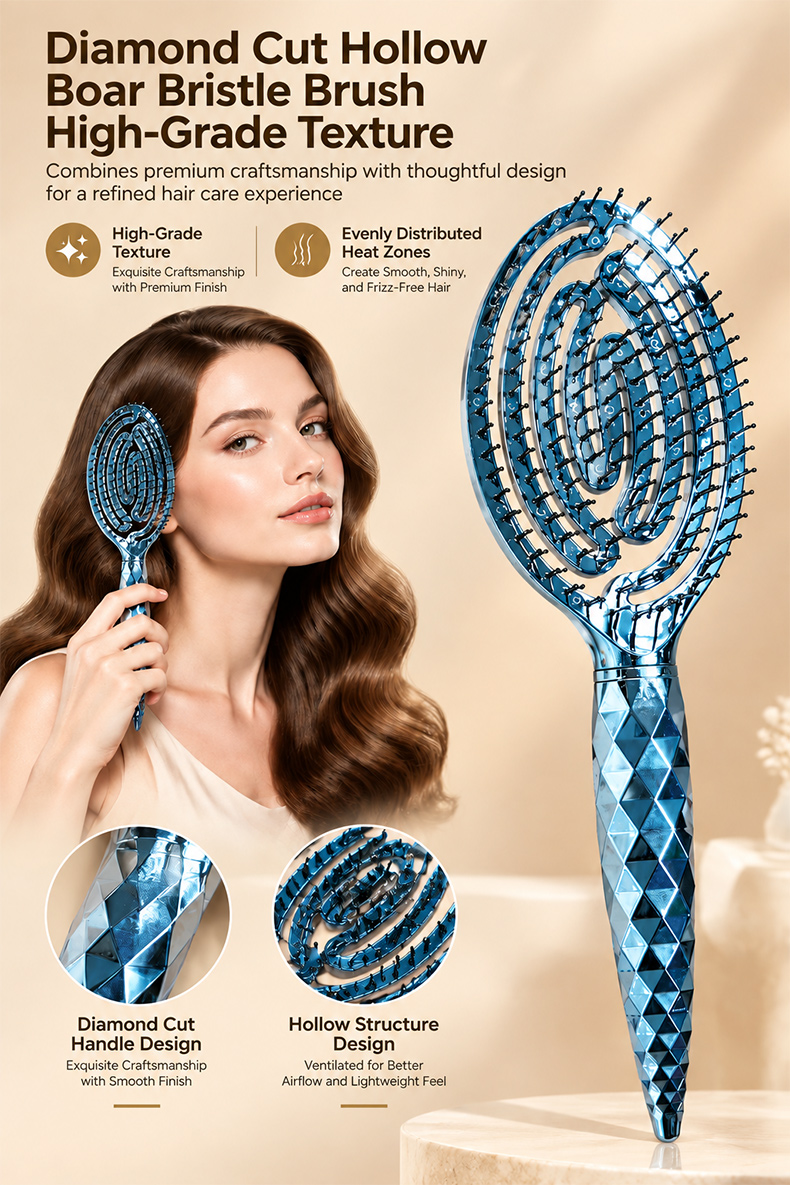
With ODM, you save time and money because the tooling is already in place. There are no mold development fees, no lengthy prototyping rounds, and no risk that a new design will fail in production. Many factories keep hundreds of proven comb designs—including wooden combs, horn combs, wide-tooth combs, and air cushion brushes—so you can find a tested product that already performs well in the market.
Key Differences Between OEM and ODM
To make the right decision, you need to compare the two models across the factors that matter most for your business: cost, control, speed, and risk. Here is a clear side-by-side view.
Pros and Cons of Choosing OEM
OEM gives you the strongest brand protection. When you invest in a custom comb design, competitors cannot easily copy your signature product, and customers start to recognize your shape, texture, and finish. You also gain the ability to iterate—when you learn what works from customer feedback, you can refine the next batch to improve comfort, durability, or performance.
However, OEM carries real downsides. The upfront cost is higher because you pay for mold creation, engineering, and multiple sample rounds. Lead time is also longer, which can delay a seasonal launch or a promotional campaign. If your sales volume is small, the per-unit cost may be too high to stay competitive.
Pros and Cons of Choosing ODM
ODM is the fastest and most budget-friendly route. You can request a sample today, approve it quickly, and place an order with a short lead time. This makes it ideal for testing a new market, filling a product gap, or launching a private label line with a limited budget. You still get your own logo and packaging, so the product still feels like it belongs to your brand.
The trade-off is exclusivity. Because the design belongs to the factory, other brands may sell the same comb with a different label. If your strategy depends on a one-of-a-kind product, ODM may not give you the differentiation you need. For most general-purpose combs, though, this rarely hurts sales—customers buy for quality and function, not just the shape.
When to Choose OEM
Choose OEM when you have a clear product vision and the budget to back it. This is the right path if you want to launch a signature comb, a patented tooth pattern, a premium material mix, or a design that matches a specific brand aesthetic. OEM also makes sense when you plan to scale up and want full control over quality, cost, and future improvements. Established brands with steady order volumes typically prefer this model because it protects their long-term competitive edge.
When to Choose ODM
Choose ODM when speed and budget matter more than exclusivity. If you are launching your first comb product, entering a new market, or building a broad catalog quickly, ODM lets you test demand with minimal risk. It is also a smart choice for retailers who need to restock proven best-sellers, and for private label sellers who want to focus on marketing rather than product engineering. As your brand grows and you confirm which designs sell best, you can later convert your top ODM products into exclusive OEM versions.
A Balanced Approach: Start with ODM, Then Move to OEM
Many successful comb brands use a hybrid strategy. They start with ODM to validate the market quickly and build cash flow, then graduate their winning products to OEM as volumes grow. This reduces risk at the beginning while building a differentiated portfolio over time. Work with a manufacturer that offers both options, clear pricing, honest lead times, and responsive communication, so you can switch models smoothly as your business evolves.
Final Thoughts
There is no single right answer between OEM and ODM for hair combs—the best choice depends on your budget, timeline, and brand strategy. OEM gives you control and exclusivity at a higher cost and slower pace, while ODM delivers speed, savings, and convenience with less differentiation. By understanding the trade-offs and planning your product roadmap, you can pick the sourcing model that helps your brand grow steadily and profitably in the competitive beauty tool market.